Is the Met’s Costume Art Concept Curatorial Slop?
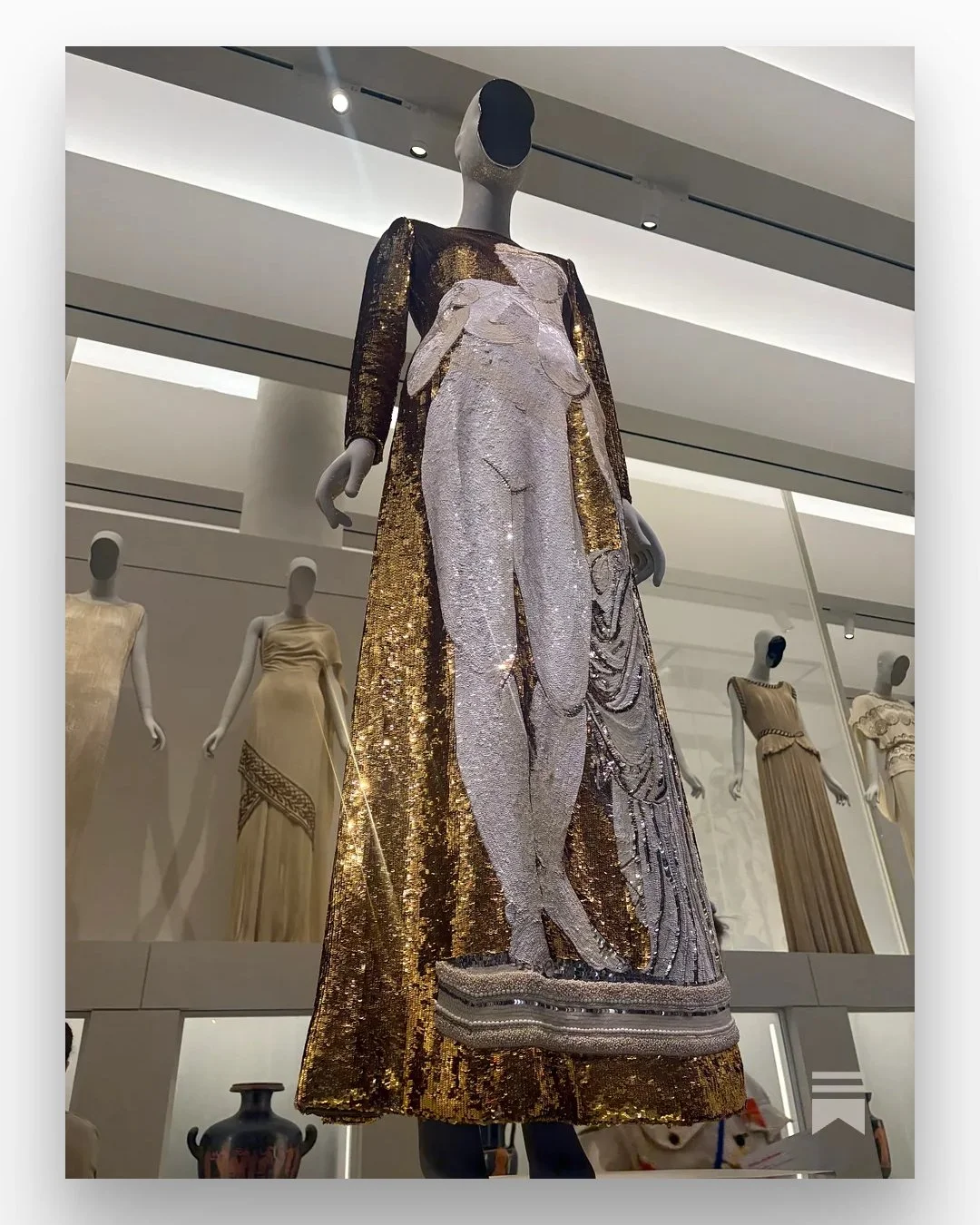
The entry to Costume Art at The Metropolitan Museum of Art’s Costume Institute
Is fashion art? The age-old question comes to the forefront within the Metropolitan Museum of Art’s latest Costume Art exhibition. Most place fashion in the category of design. But for me, some designs have always been Art. These works aren’t limited a solitary designer, but some of the most moving pieces I’ve witnessed are from Alexander McQueen. His tailoring of a blazer—following years working on Savile Row—was executed with better precision than some gowns we witness on major red carpets today. I’m repeatedly astounded by his designs, and maybe, I could call viewing Alexander McQueen: Savage Beauty at the Met many years ago a fashion awakening.
It is possible that this exhibition solidified such a high standard that some shows today leave me feeling meh. It could also be that—in museums’ efforts to reach wider audiences—I’ve witnessed the same regurgitated concept across art institutions in recent years. Take this year’s exhibition from The Costume Institute at The Metropolitan Museum of Art: the same broad theme (exploring fashion as high art and positioned alongside it) echoes two other major fashion exhibitions—and one smaller one—over the past two years.
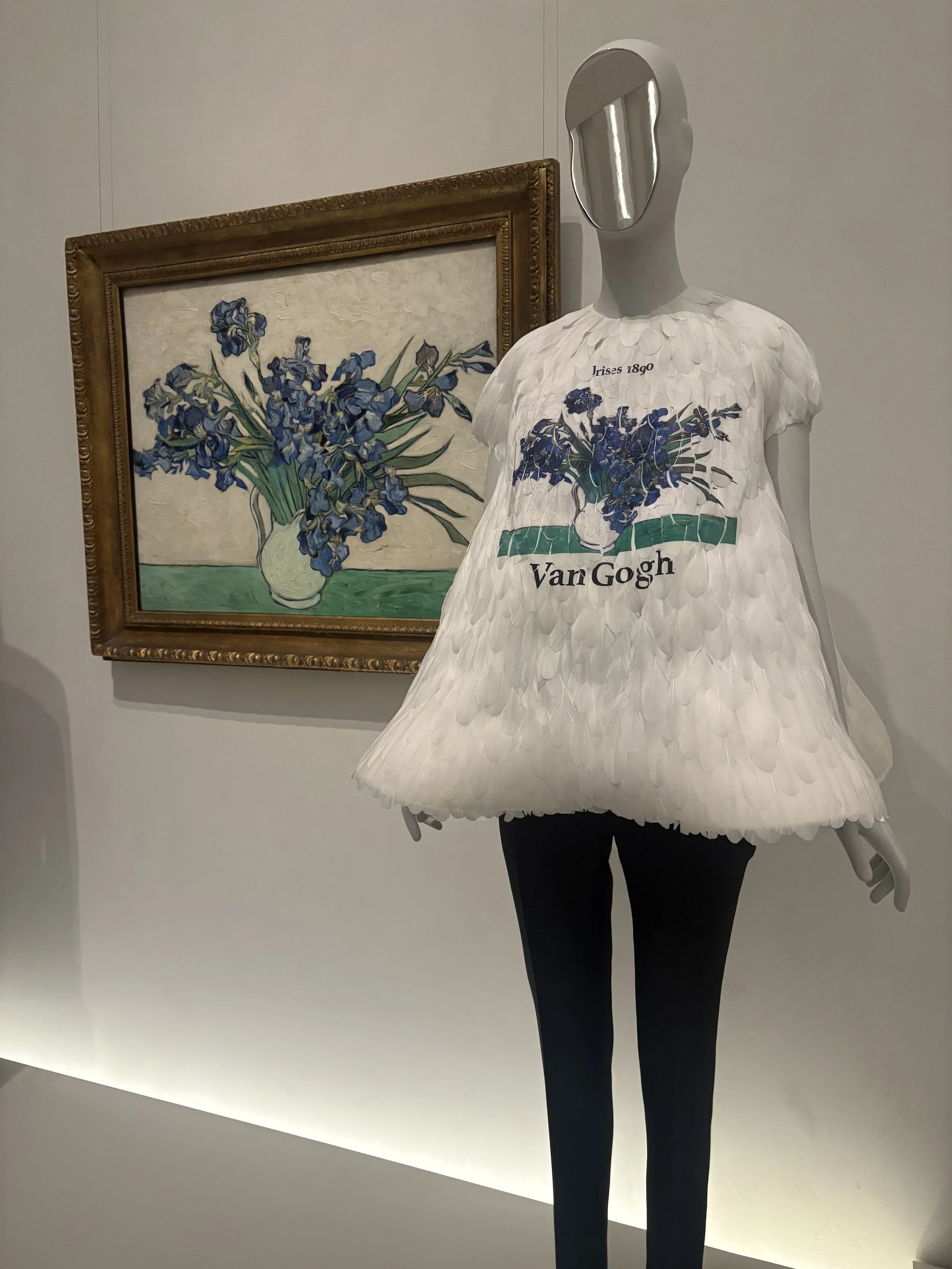
Van Gogh’s 1890 painting, Irises, alongside Loewe SS25 by Jonathan Anderson
Aspects of Costume Art reminded me of Sleeping Beauties from two years ago at the Met, which was a spectrum of designers’ works, and it extended an invitation to think about these as archival pieces shifting from resting to resuscitated. Louvre Couture, from last year at the institution’s first fashion exhibition, contained a similar broad-stroked theme of tying luxury garments to other forms of design (mostly, interior and furniture design). Just earlier this year, Art x Fashion at The Museum at FIT contained a similar side-by-side comparison of clothing and accessories with works of art. I enjoyed pieces within each of these shows and some of the curatorial choices made within them. But with Costume Art, I couldn’t help but notice that we’ve seen this overarching theme before. It’s the spoon-fed, don’t-you-see-it correlation that feels really simple to absorb. The new approach threaded through at the Met was fashion’s relationship with the physical body.
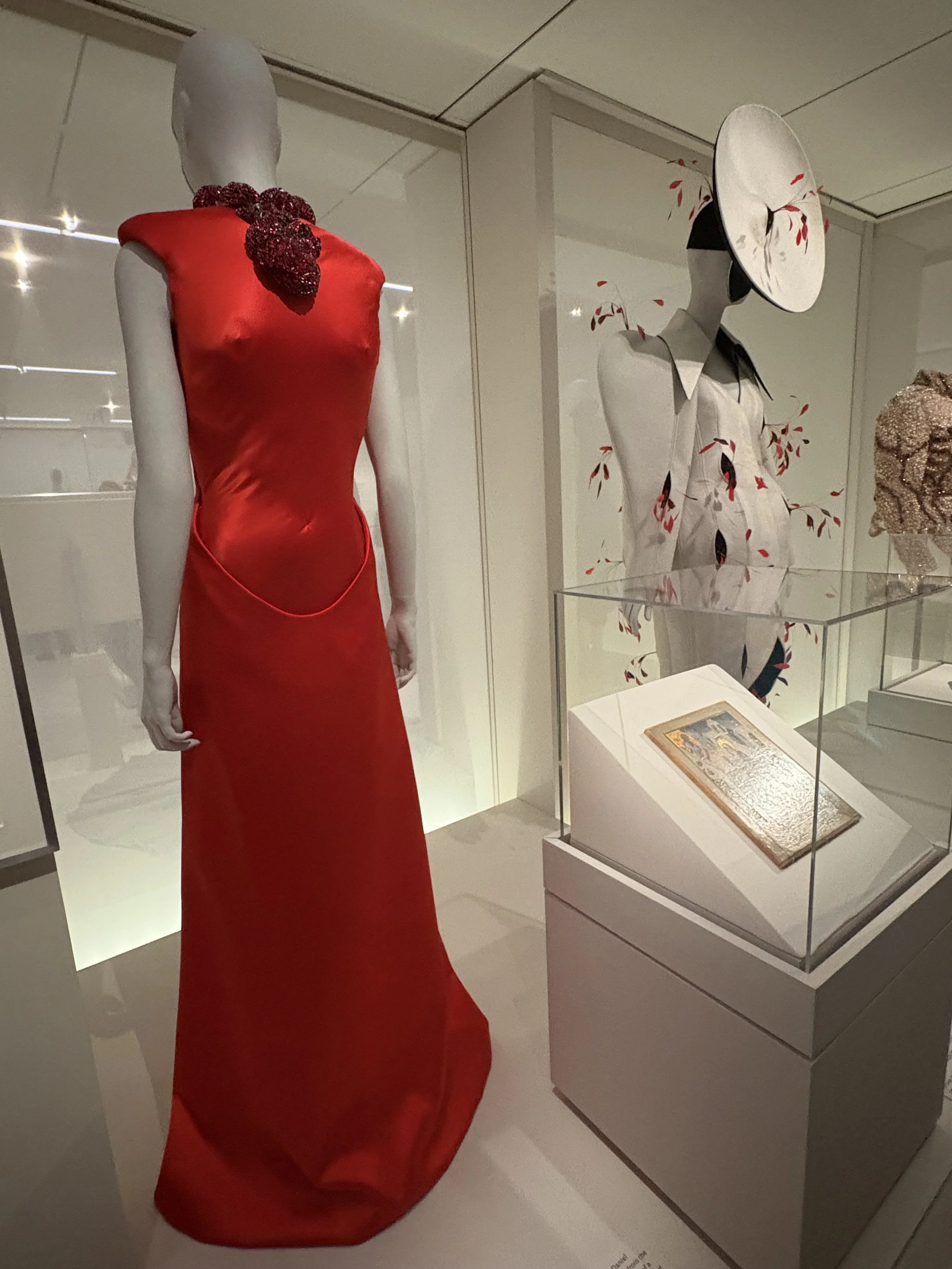
Schiaparelli’s Ensemble autumn/winter 2025-26 haute couture by Daniel Roseberry
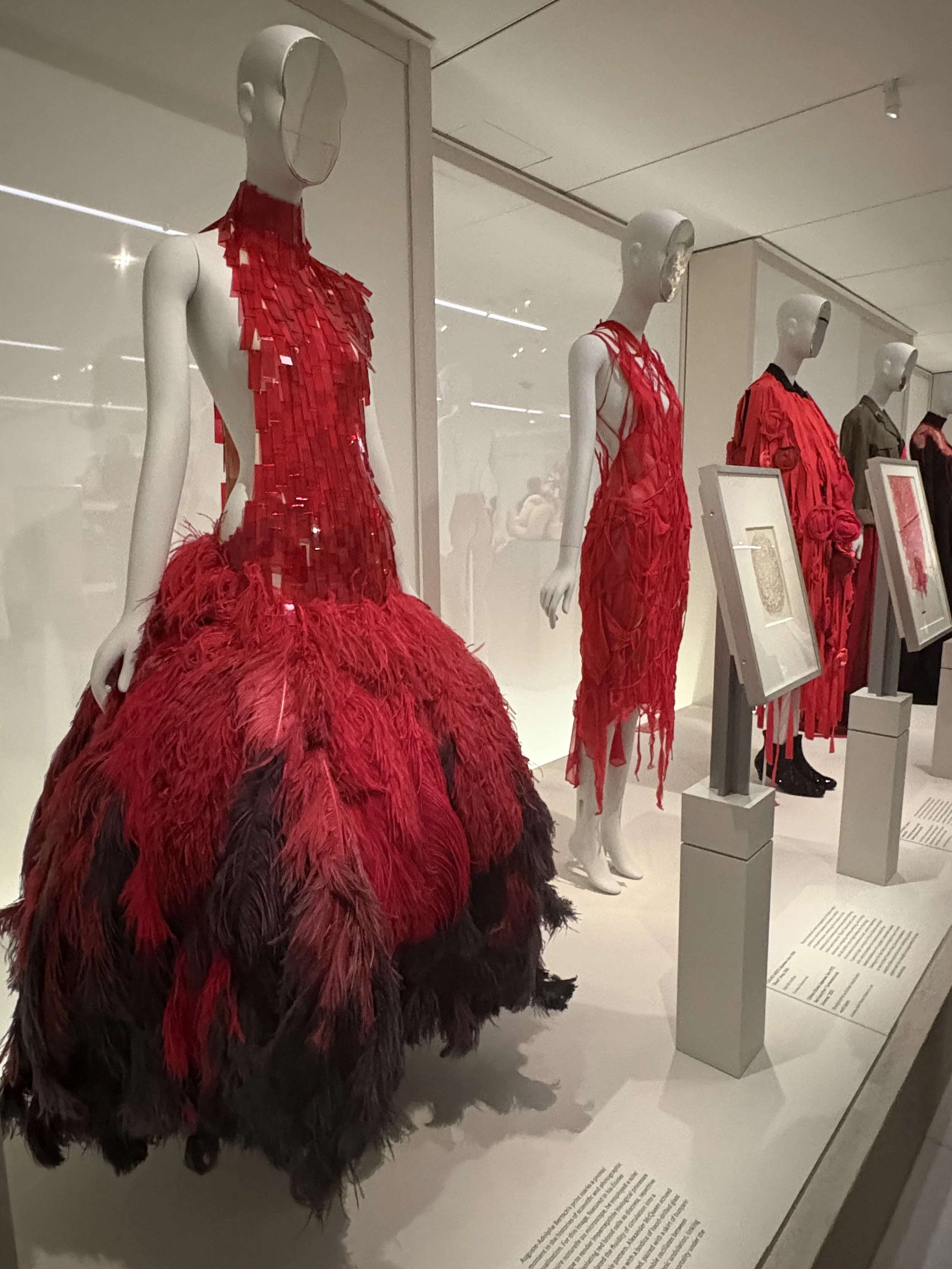
Of course, there are pieces in this exhibition that made me hover on my toes, narrowly avoiding the you’re-standing-too-close-to-the-art automated sensor. The Robe à la Française from the 1740s with its grand silhouette and delicate embroidery. The sequin-embroidered silk dress with unmistakable fallopian tubes designed by Alessandro Michele for Gucci resort 2020. The Schiaparelli red dress with a heart of Swarovski crystals that took over socials after Daniel Roseberry’s autumn/winter 2025-26 show. And, of course, I took a long pause in front of McQueen’s razor clamshell dress from spring/summer 2001.
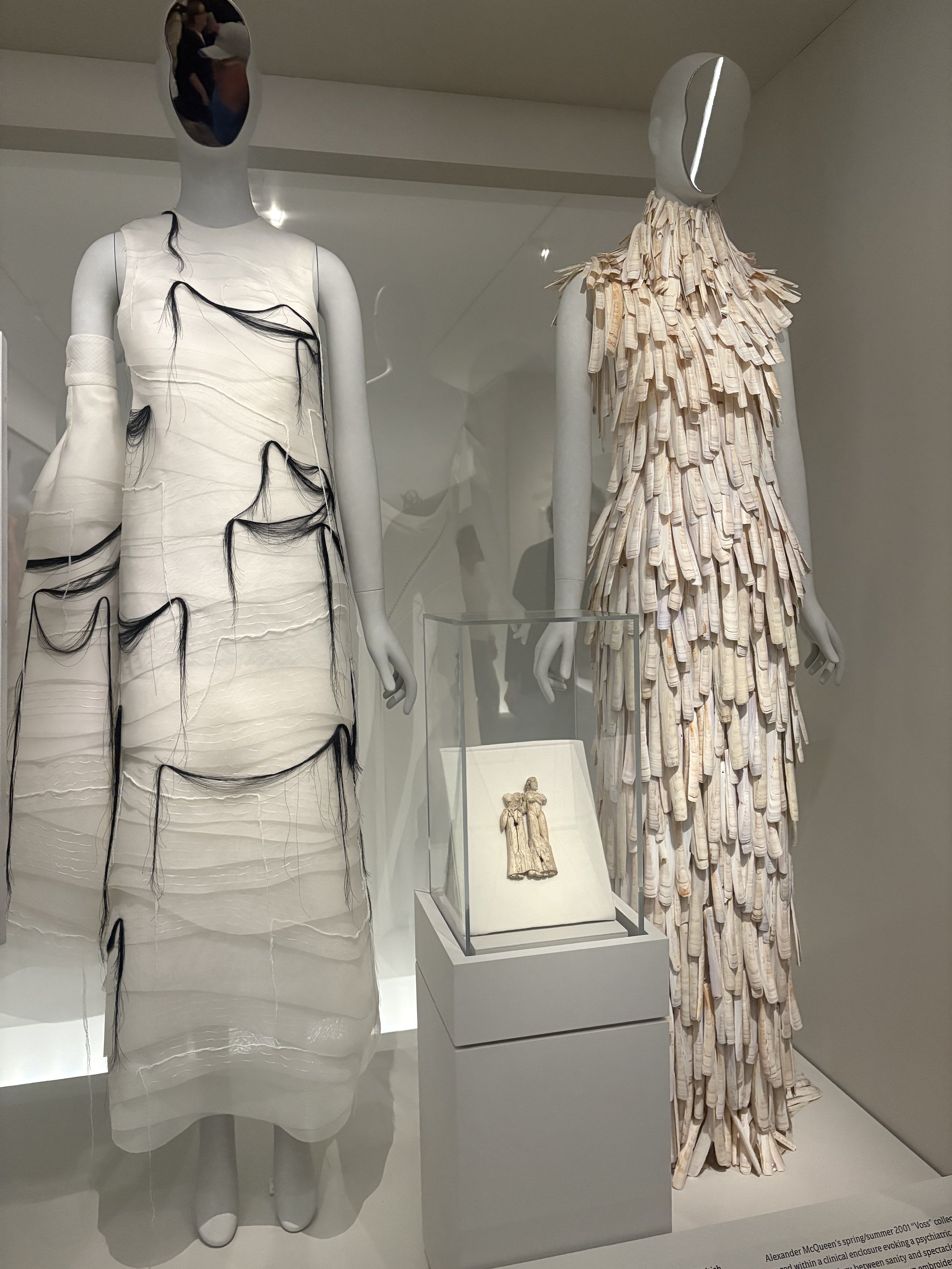
Alexander McQueen dress from spring/summer 2001 on the right
With the exception of these pieces and some others, I was struck more by a combination of two other exhibitions at the museum: Raphael: Sublime Poetry & Lillian Bassman: Bazaar and Beyond. I stood in a trance in front of Raphael’s “Portrait of a Young Woman with a Unicorn” while feeling the energetic pressure to move along in a sea of viewers. I paused for works that were more reminiscent of Michaelangelo and others that shared traits of DaVinci’s works noticing the influences of his contemporaries. Stumbling across the small Lillian Bassman exhibition was a welcome surprise and felt more mentally engaging than Costume Art, which is interesting given the insane financing, or recent Bezosification, of The Costume Institute.
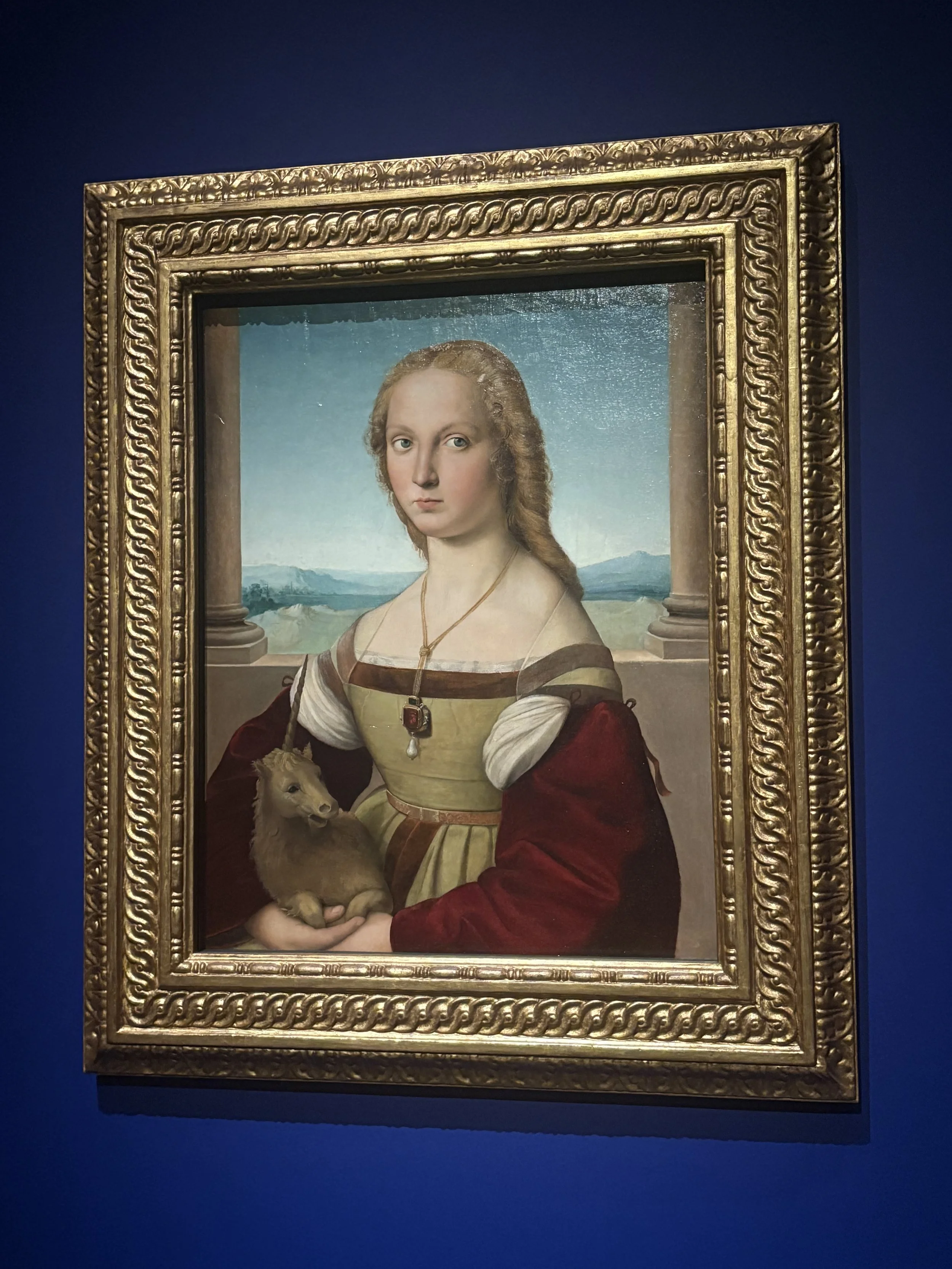
Raphael’s “Portrait of a Young Woman with a Unicorn”
Bassman arrived at Harper’s Bazaar right when they were redesigning the publication with a more avant-garde sensibility. Bassman moved from illustration into photography at The New School for Social Research where she was taught by Alexey Brodovitch, who also served as the Art Director at Harper’s Bazaar. At The New School, he “imparted the sensibility of the Surrealists, the best practices of the Bauhaus, and the cool rigor of Constructivism.” Bassman was there at the right time, but she also brought a fresh and hard-working approach to the magazine, and learning about her processes at the magazine, filled with innovation, human touch and invested time, is like some panacea for those of us sick of hearing about AI.
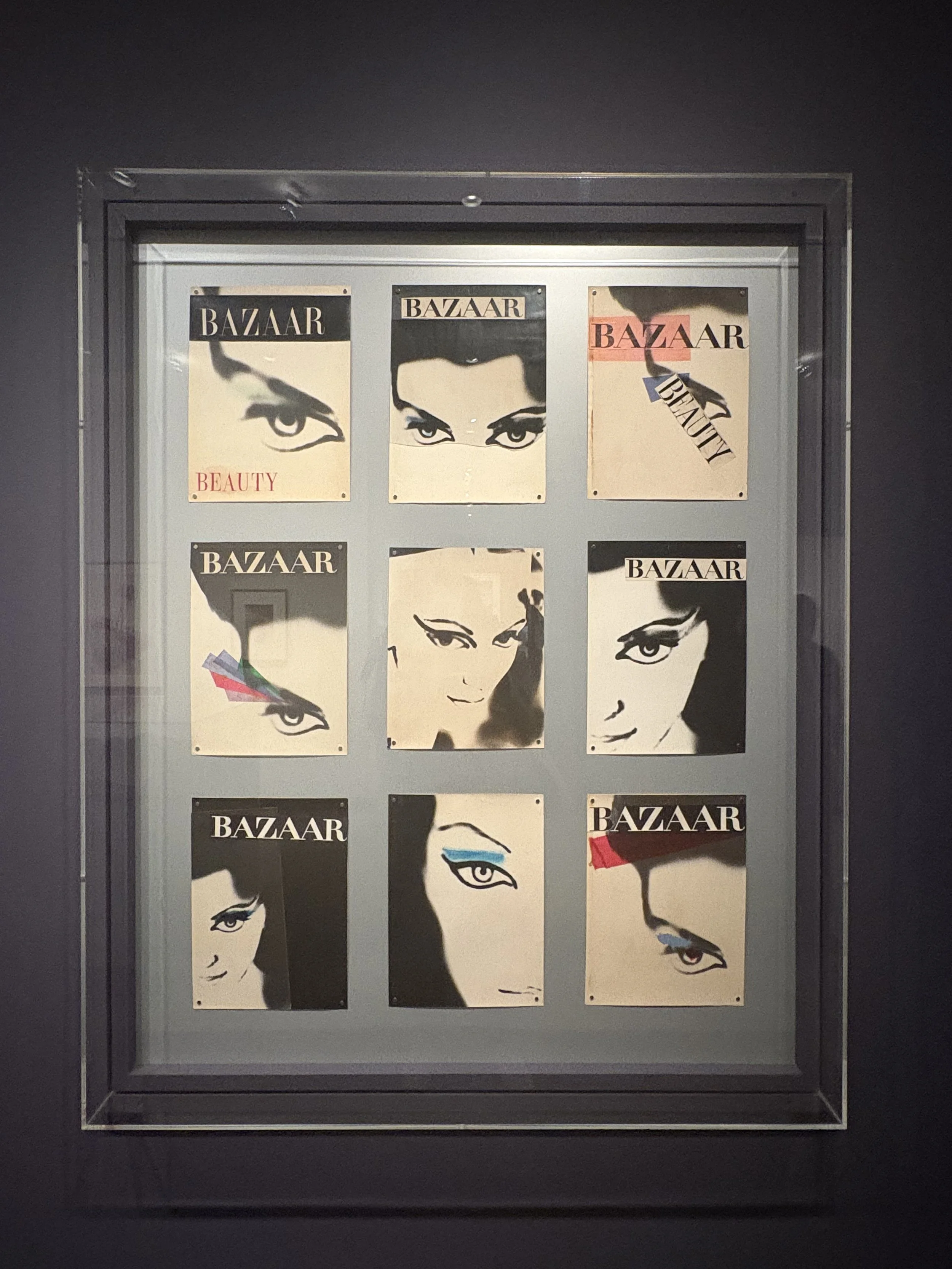
Harper’s Bazaar Magazine Covers, 1949
I think the mental engagement that I found through these other exhibitions is what we’re seeking from current fashion exhibitions, as well. If you’re into fashion exhibitions, and in New York, there’s no doubt you should see Costume Art—and stop by Raphael and Bassman, too. But fashion exhibitions don’t need to be all show. The Costume Institute might be engaged in what I’ll call a “conversion exhibition,” which involves casting a wide net every other exhibition interspersed with specific era or designer-focused ones for the design nerds and aficionados. So, maybe next year’s show will focus on a movement, a designer’s oeuvre or the chronicling of a century of fashion writing. Because when you see a great designer’s legacy, you don’t need to rest your brain to consume their craftsmanship. In those instances, I think we are given the opportunity to engage both mind and heart in tandem—and to discover what this exhibition was trying to tell us all along: that some fashion design is art.